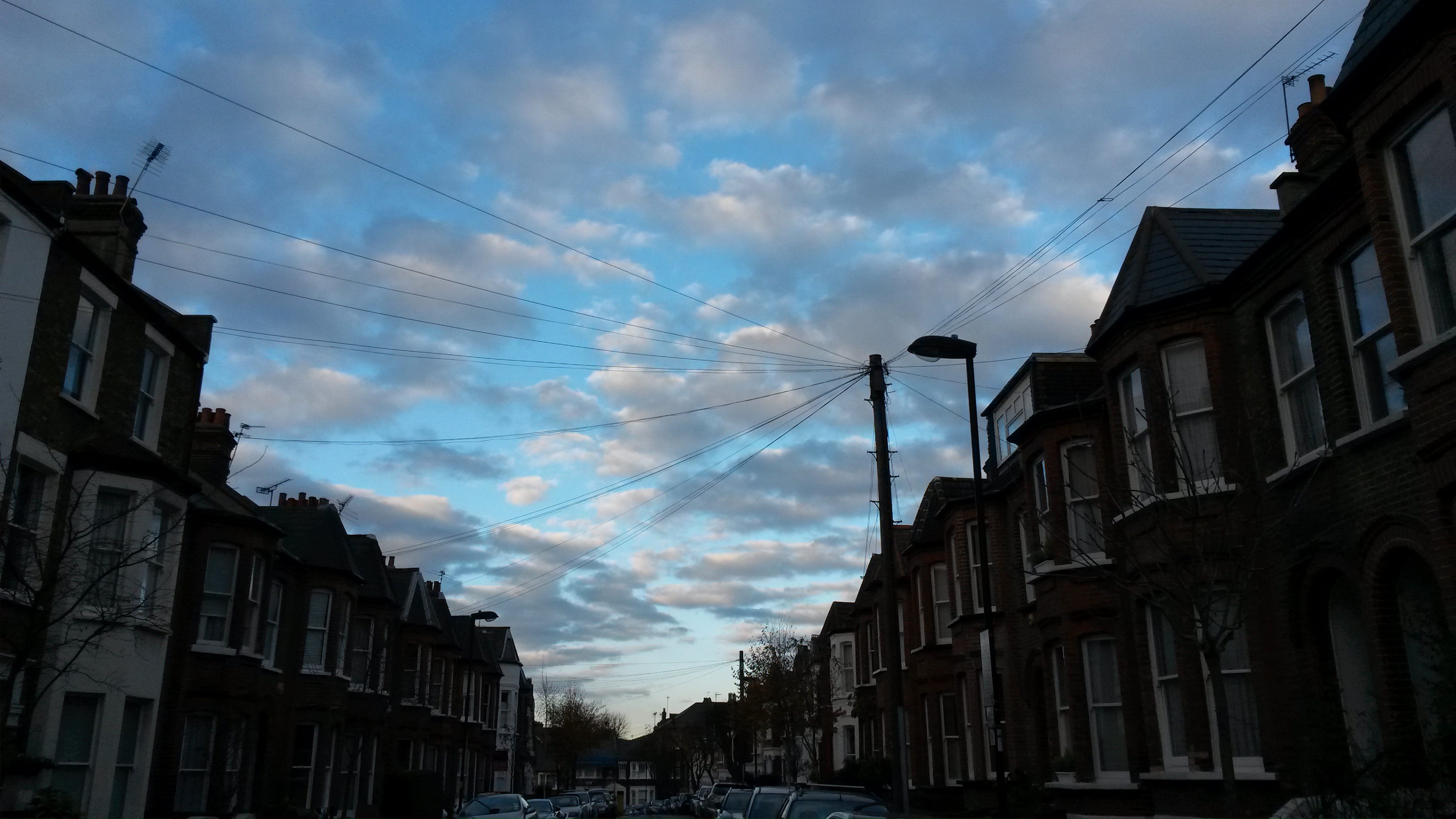
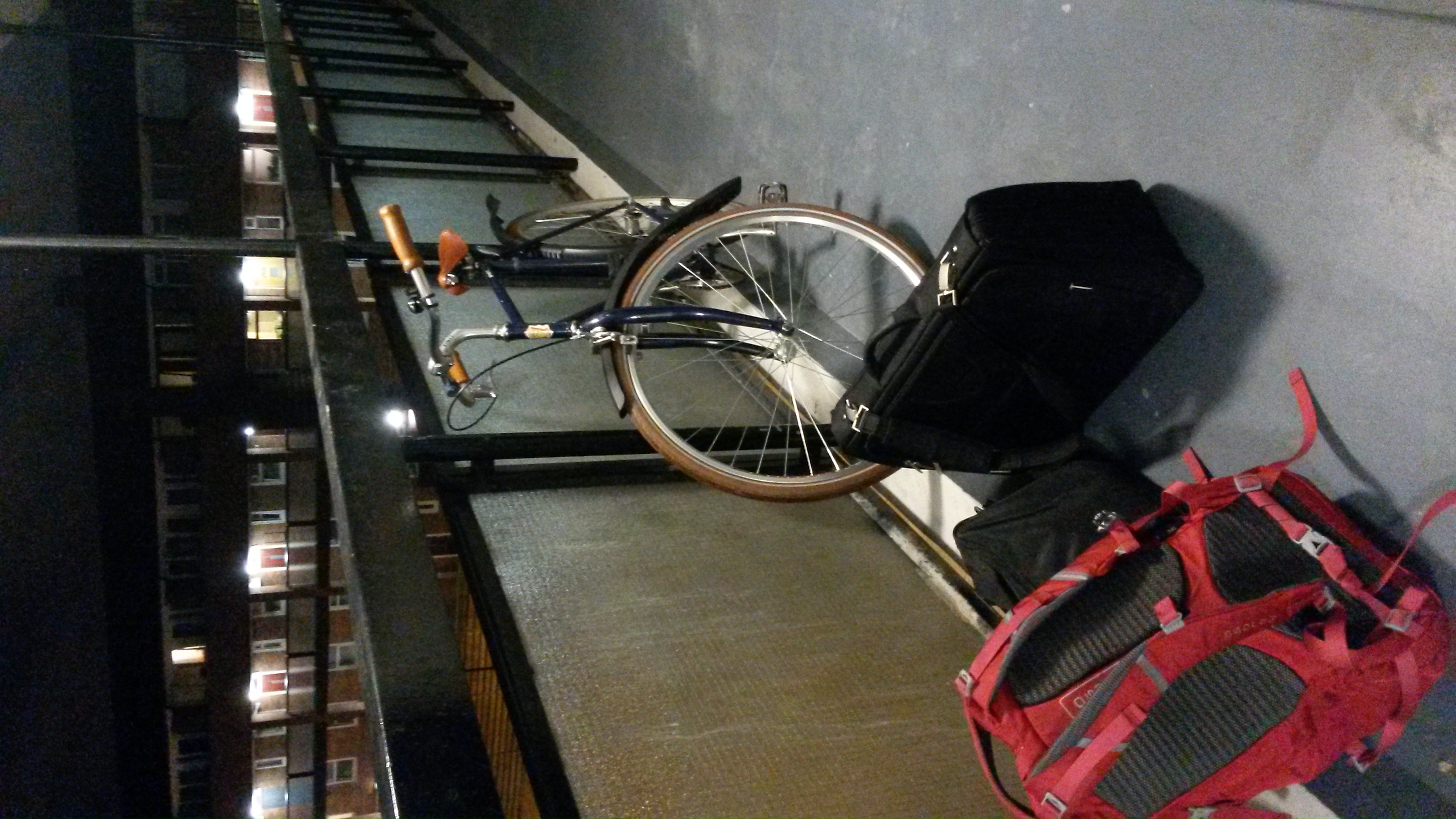
One of the many things the brits do different is wiring homes for electricity. Where else in Europe would you see such contraptions?
It is possible that the best strategy to educate dog owners is by humour rather than fines?
A GREAT shop hidden in a corner street close to Angel, filled to the brim with material for drawing, painting, creative activities and whatnoot: CASS ART
Of course there are a lot of nice-looking shops in Liverpool road, so singling one out feels unfair. It has to be said though that most of those have incredible prices. Take twentytwentyone for example: it must be the only design outlet in the world where Scandinavian furniture costs more than in Oslo!
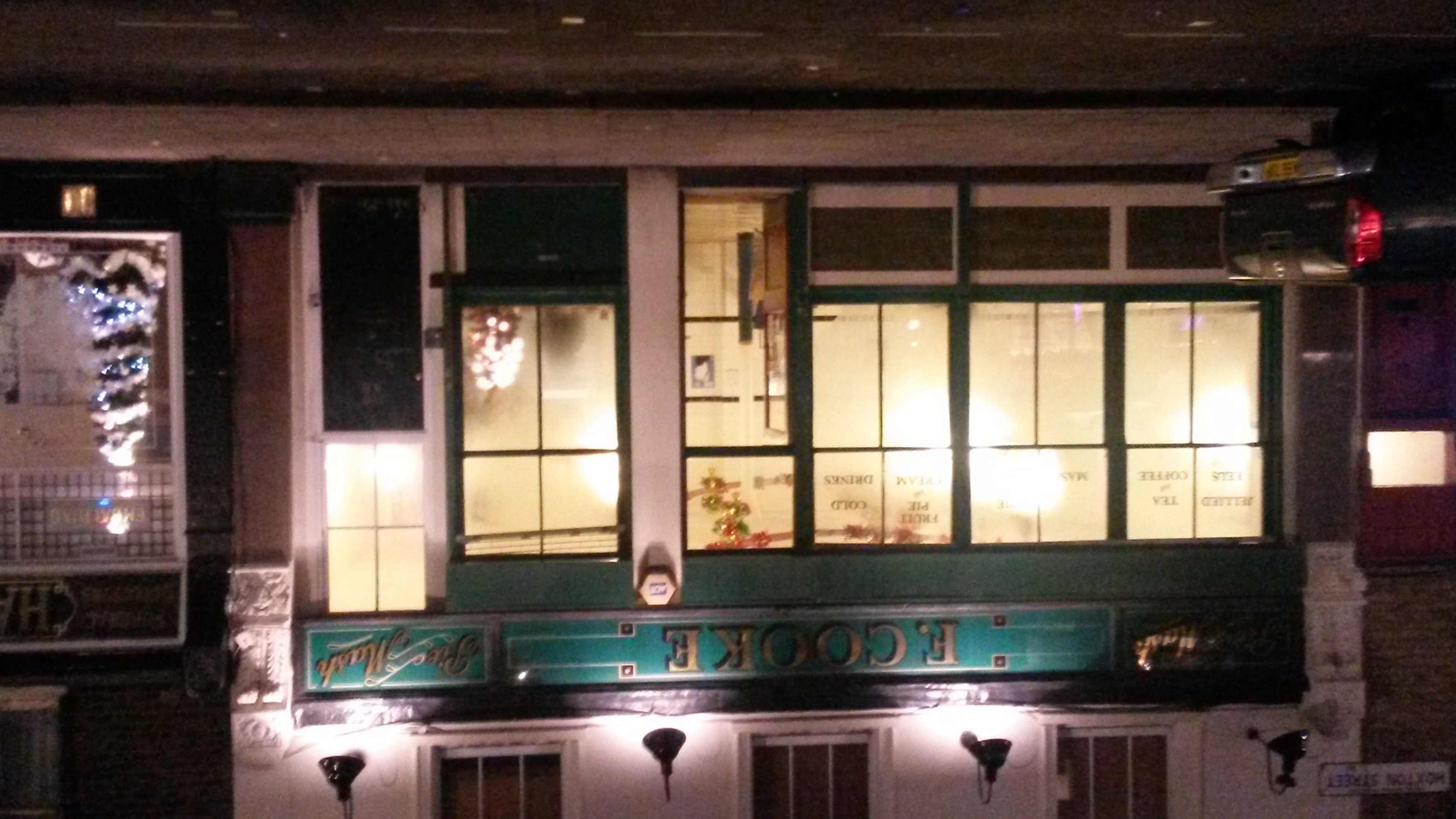
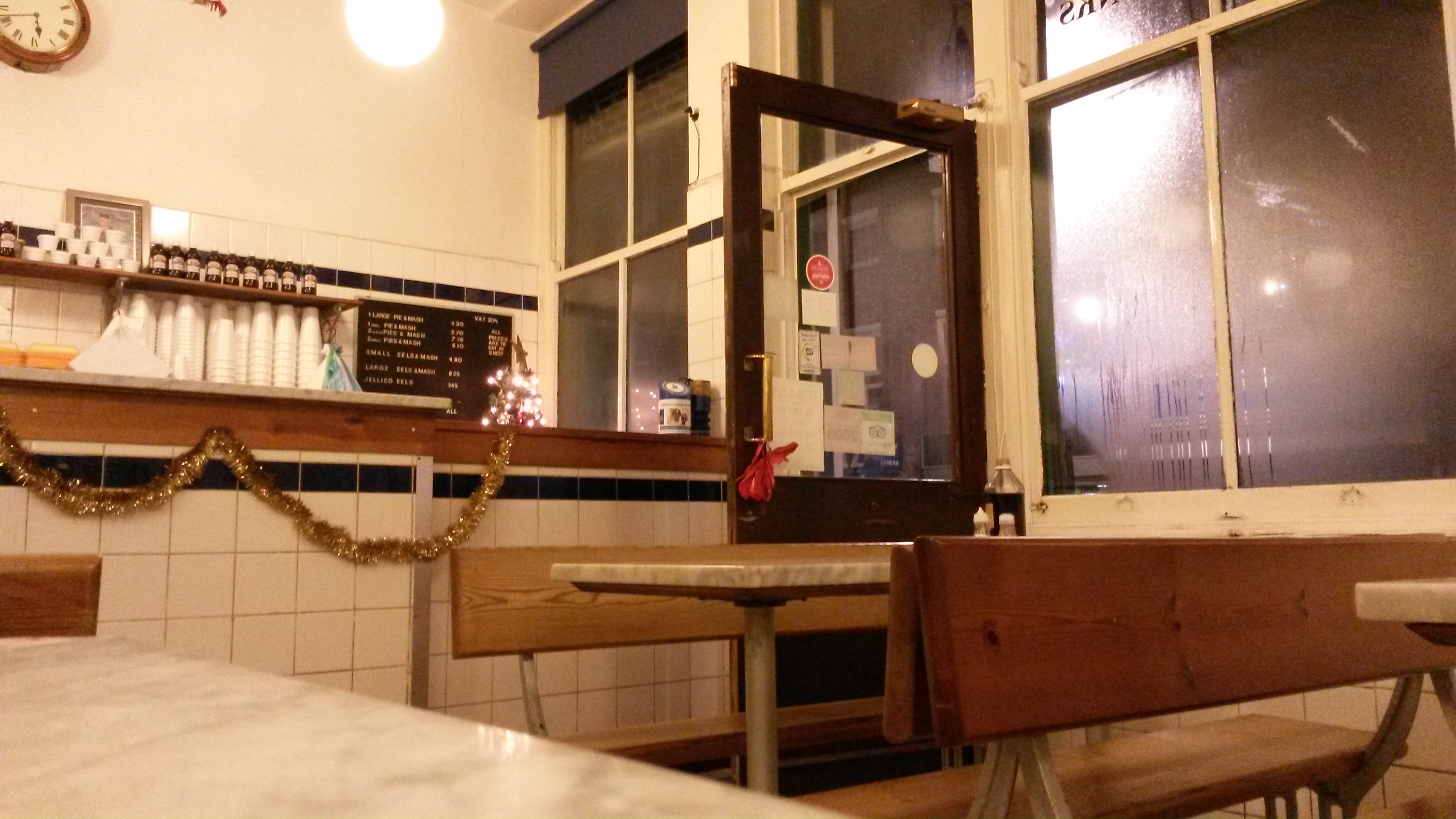
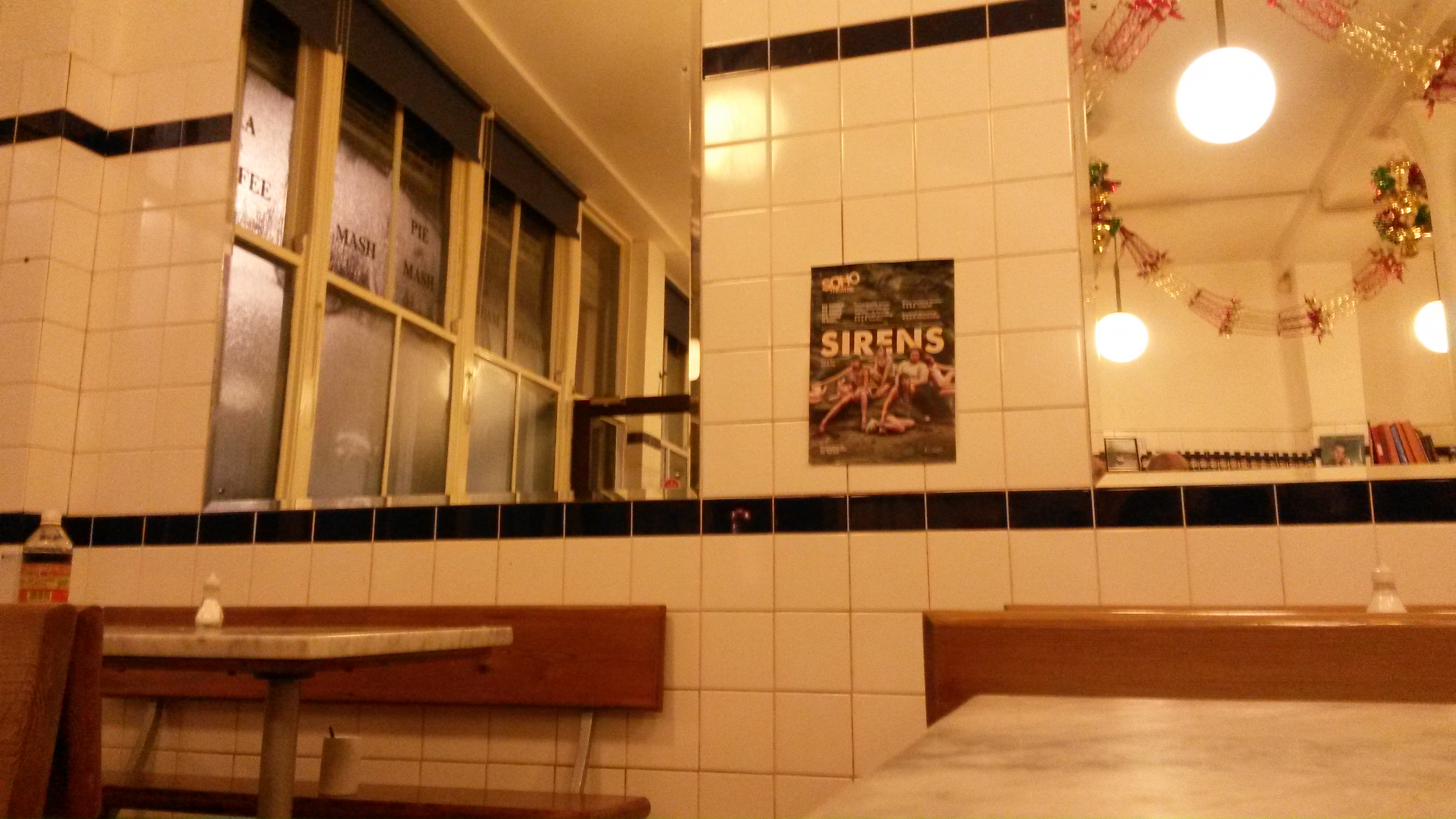
One the least hipster-looking places in Hoxton, within walking distance of my cozy small flat, is F. Cooke’s “Pie & Mash” parlour.
So far I had not managed to try it out, maybe because there’s no menu on the door and I’m a bit scared of getting a pastry stuffed with eel, or because there’s no opening times written, either, and I tend to pass by late in the evening or on sundays.
This time I carefully planned my visit for a Saturday afternoon, hungry like the wolf after having dutifully swam my weekly kilometre.
Results:
Atmosphere: 9 – everyone seems to know each other (except me).
Food: 6 – maybe this is the best pie in London, maybe not. I think I am not a great fan of pies after all
Went for the second time to my fave ramen joint in London: Cocoro, next to the British Museum (see http://cocororestaurant.co.uk/en).
Forgot to take a picture, so without further ado here’s the rating:
Food: 9/10 – if you love thick, rich, creamy tonkotsu, then this is the place for you
Service: 7/10 – good enough, but definitely not the same you’d get in a restaurant in Tokyo
Ambience: 8/10 – a bit quaint looking, with a big advantage: no-one inside. In Paris you’d have to queue for one hour and half for the same stuff!!!
Overall score: 8.5.
If anyone can recommend a better japanese, I’m up for a culinary expedition.
Next in the list: find good Udon!
Last time I was in London, for 3 months during the spring, I had bought a nice 2nd-hand citybike. The plan was to use it on my daily commute, and resell it before going back to the continent.
Unfortunately, both wheels where stolen on a night without moon. (and without public transport. A strike was starting)
I was told that this was to be expected, since I did not properly lock them (only the frame was properly secured using an Abus lock).
And to be honest, I had noticed that most bicycles carried two locks, at least in the city centre. I was just too lazy to do that.
When I moved in for good, at the beginning of November, with my lovely bike with a dark blue Mattioli frame, Schwalbe tyres and Brooks saddle, I consequently decided that it would sleep safely in the home with me every night. I bought two locks. And I attached the saddle to the frame using a custom-made anti-theft chain devised by old friend and bike lover Massimo.
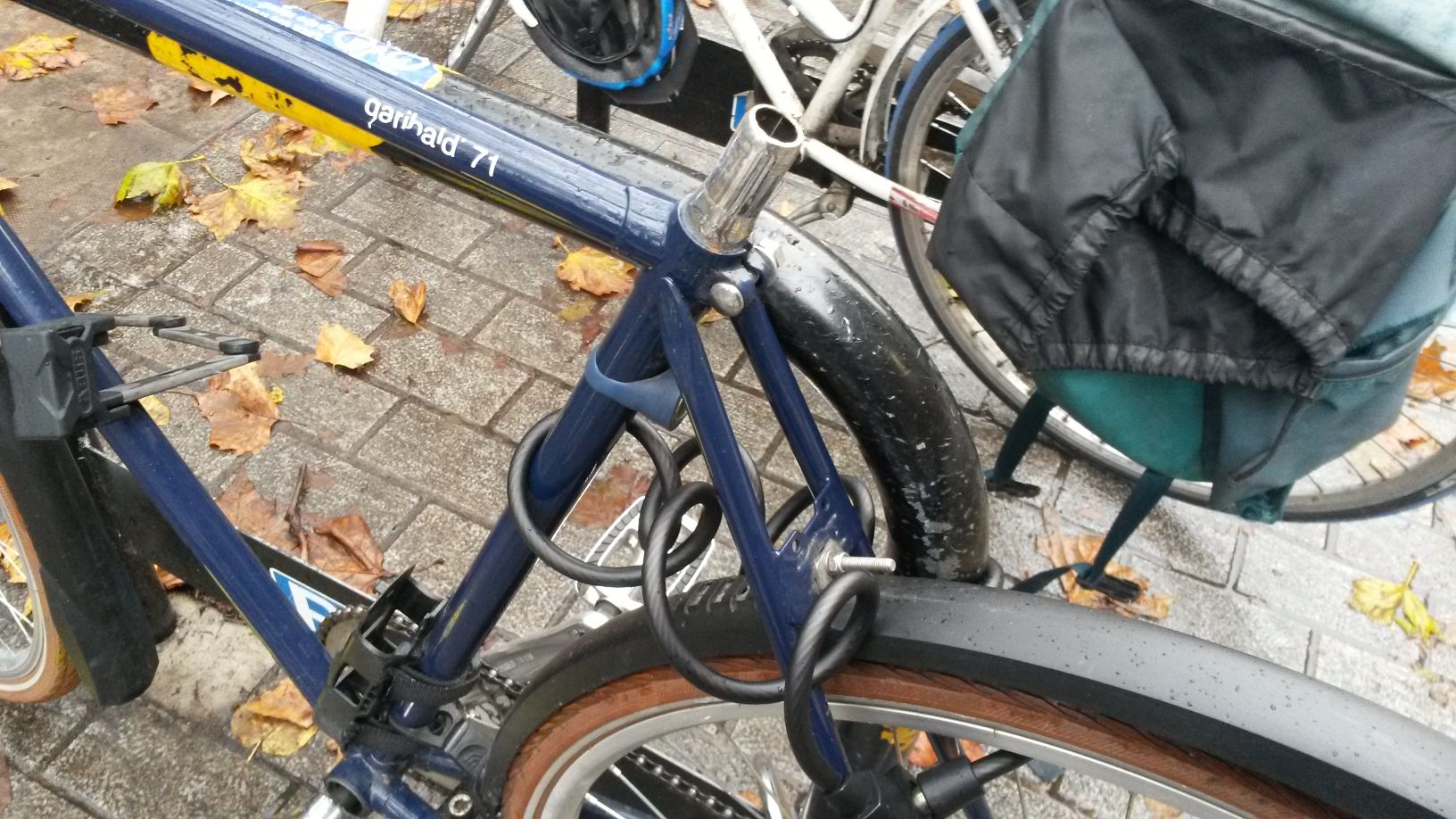
Alas, it took less than one month for the saddle to disappear, on a rainy afternoon, while I was swimming and the bike was attached in front of the pool. The saddle was even hidden under a protective rag.
Notice anything missing?
All I have to say to the my fellow city-dwellers, who for one reason or the other have fallen out of luck and have to resort to recover parts from other people’s bicycles for a living, is just one word of advice. STEER FUCKING CLEAR IN THE FUTURE, OR ELSE!
Ricevo da un’amica e volentieri ripubblico la seguente mail:
Ho trovato con sgomento il seguente video su youtube: http://www.youtube.com/user/tg1#p/u/5/fIcA37SFN8c
L’ho guardato e mi son venute le lacrime agli occhi non solo per il terribile danno inflitto a una femmina di orso marsicano e ai suoi tre cuccioli, ma soprattutto per la stupidità umana. Cosa ancora peggiore e molto all’italiana, il filmato è stato trasmesso da TG1, TG5 e TGR Abruzzo e NESSUNO, dico NESSUNO, si è soffermato sulla gravità di quanto accaduto.
Due automobilisti (uno dei due è un carabiniere, quindi rappresentante della legge!) hanno inseguito un’orsa con i tre cuccioli per un paio di chilometri su strada asfaltata, consapevoli del disturbo arrecato agli animali ma, nella loro totale stupidità, ignari del fatto che sottoporre a una corsa di quel tipo una femmina in allattamento e tre piccoli implica far consumare loro una enorme quantità di energie che non è detto gli esemplari riescano a recuperare alimentandosi normalmente; implica sottoporre la madre a uno stress ormonale fortissimo che potrebbe indurre l’interruzione della produzione di latte; implica correre il rischio di perdere un’altra femmina e per di pi? la sua cucciolata che, per una popolazione di circa 45-50 animali di cui ben poche femmine riproduttive, è un evento drammatico.
E sulla gravità di quanto hanno fatto questi due imbecilli ? caduto il silenzio. Sul sito web delle associazioni ambientaliste non ho trovato nulla, tanto meno sul sito del Parco Nazionale d’Abruzzo. Vergogna! Solo Santoloci, esperto di diritto dell’ambiente, ha tirato fuori la sua indignazione pubblicamente sul web; la sua lettera è qui: http://www.simoline.com/clienti/dirittoambiente/file/news_2269.pdf. Facciamola girare, scriviamo ai telegiornali denunciando la parzialità di quello che hanno detto e fatto.
What are you waiting for? Jump on a plane to Addis Ababa and join her for an unforgettable experience! Circus, theater of the oppressed, traveling through Africa, could you ask for more?
Ok, I was Joking. If you really really have a good excuse not to go help in person you can always donate. 😉
If there was any reader left of this blog, he would surely have noticed that the frequency of the posts has been dramatically low for one year or more. As I have really not enough time to devote to writing useful information tidbits, I decided to display here the tweet messages I write. They’re displayed on the right column. Hope someone finds them inspiring…
For everybody coming to the conference – or just plain interested in what’s happeing within eZ ‘the company’ or eZ ‘the cms’, an interesting new blog: http://blog-ezconference.audaxis.com/
Highlights include: certified support for Oracle (by yours truly) and Solaris, new webdav implementation, much improved caching mechanism for high traffic conditions, more flexible workflows via custom object states.